
The Know It All Guide To Color Psychology In Marketing + The Best Hex Chart 70
- The In Tribe

- Mar 9, 2021
- 2 min read

Get Your Color Psychology Marketing Bundle Now Plus, join our email list to stay up to date.
Let's Start With The Basics Of Color Theory
Understanding how color works isn't just for artists dipping their hands into paint and pigments all day long. Anyone in marketing needs to understand the basics of color theory because no matter what you are using color in your content.
Primary Color
Primary colors are the three colors that make all other colors. They are red, blue, and yellow. These three colors can be used to create the next level of colors, called the secondary colors.

Exceptions, of course, abound when it comes to talking about primary colors. If you're talking color theory in regards to light, your primary colors would be cyan, magenta, and yellow. Let's not forget CMYK for print and RGB for screens or monitors. And, when mixing paint, it matters what particular pigment you're using to get that red in order to come up with the proper new color. But let's keep this simple and stick with red, blue, and yellow.
Secondary Colors
Secondary colors are purple, green, and orange. They are created using the primary colors. If you look on the color wheel, you'll find the secondary colors in between two primary colors.
Color Guide:
red + blue = purple
blue + yellow = green
red + yellow = orange

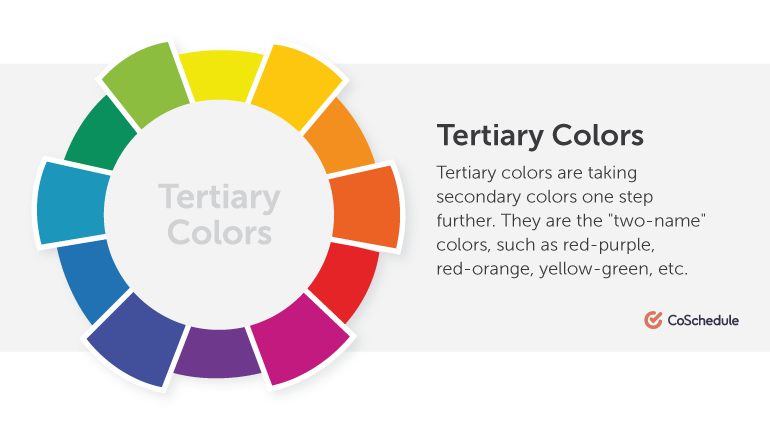
Tertiary Colors
Tertiary colors take secondary colors one step further. They are the "two-name" colors, such as red-purple, red-orange, yellow-green, etc.
They are created by adding more of one primary color than the other creating not a true secondary color. It ends up being closer to the primary color.


Comments